Skip to content
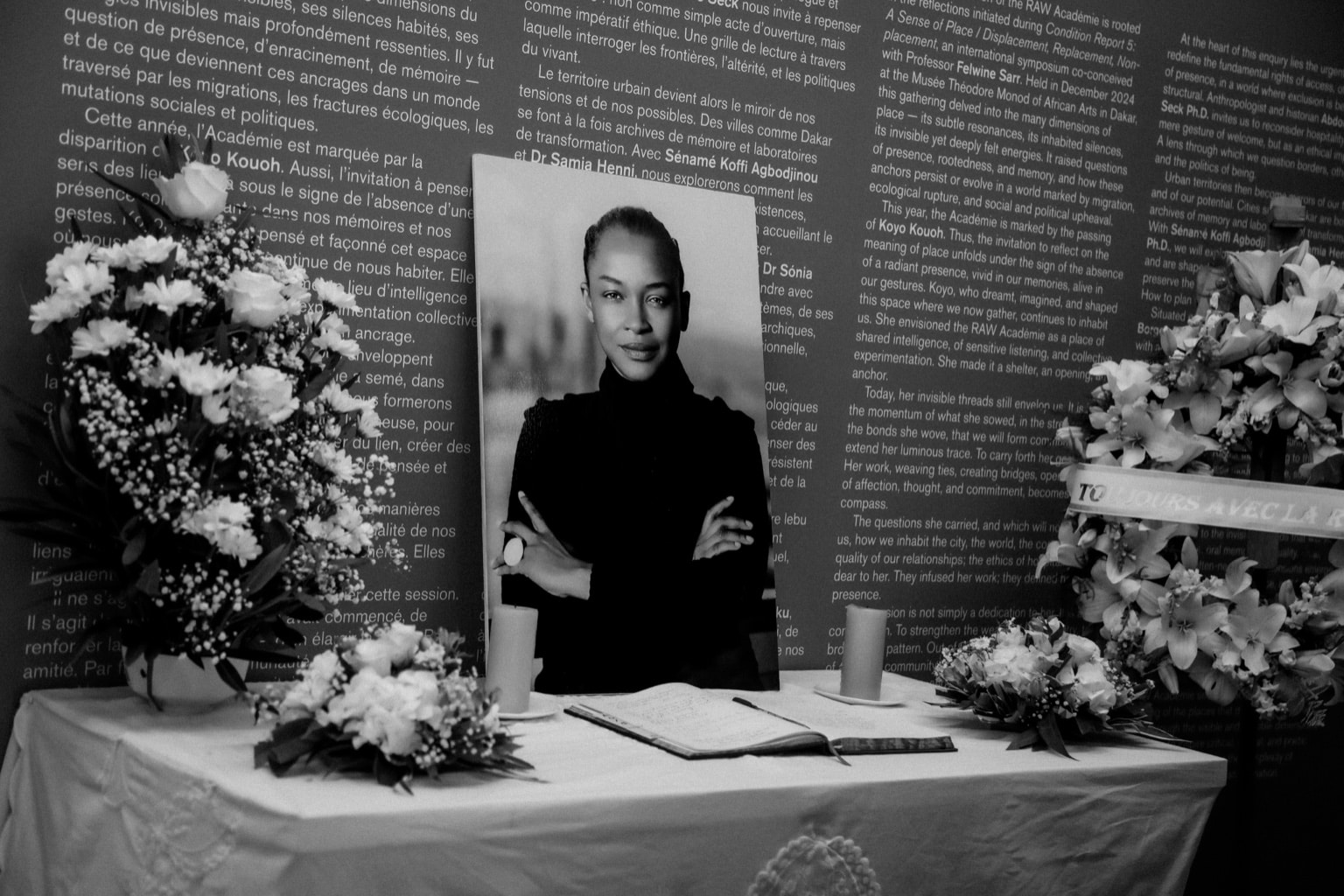
A black and white photo of a large photo of Koyo Kouoh leans against a wall in front of a guest book, surrounded by flowers at her memorial.

Issue 009 Fall 2025 Profiles

A Tribute to Koyo Kouoh

We remember the trailblazing curator who unexpectedly passed away in 2025 at the age of 57.

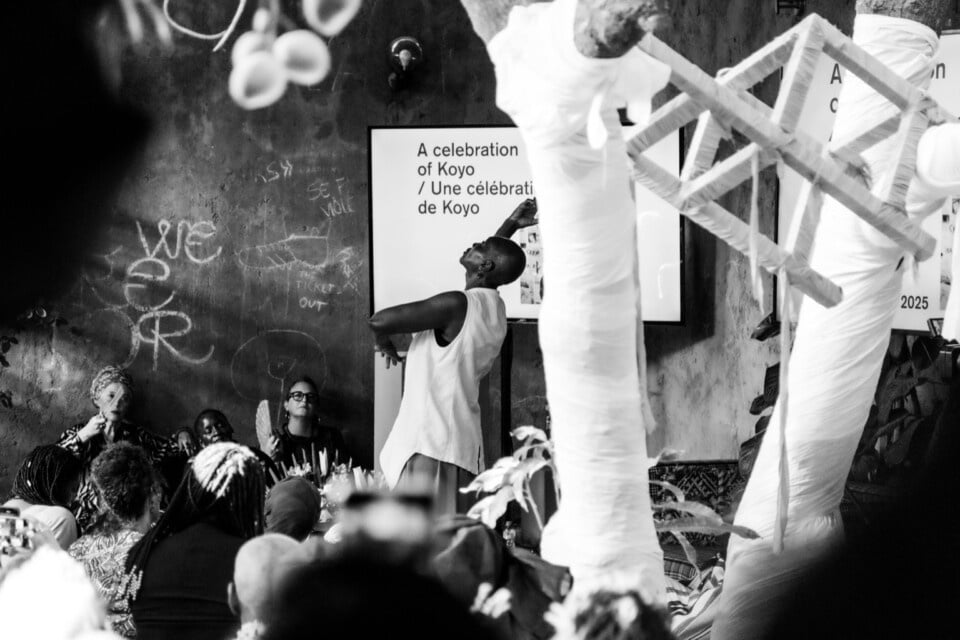
Courtesy of Malick Welli, June 2025.


Long before Koyo Kouoh was set to curate the 2026 Venice Biennale—the first African woman to be offered the commission—she was known as a fighter for artists of color, Black artists in particular, and one of the most important voices for African artists. Her death came 10 days before she was due to announce the Biennale’s title and themes and shocked—and continues to shock—the art world. 


Kouoh’s route to the arts was an indirect one. Born in Cameroon, in Douala, she moved to Zurich at the age of 13 with her mother. After studying business administration and banking, she began writing about culture and movies. On a trip to Dakar, Senegal, she met artist Issa Samb and was forever changed. Samb was an actor in theater and cinema, a poet, and a writer of essays and novels. Kouoh told the Financial Times, “I always understood art as an objective, a commodified materiality. With Issa, I got into this sphere of understanding art as a philosophy of life, as a thing that can be intangible.”1

In 2008, she founded Raw Material Company, a residency program and exhibition space, in Dakar. Eleven years later, she became managing director and chief curator of Zeitz Museum of Contemporary Art Africa (Zeitz MOCAA), a pan-African and pan-diasporic museum in Cape Town, South Africa, dedicated to promoting and preserving contemporary art from Africa.

Last year, Kouoh’s exhibition When We See Us: A Century of Black Figuration in Painting at Kunstmuseum Basel was comprised of 150 artists including Amy Sherald, Njideka Akunyili Crosby, Zandile Tshabalala, Cyprien Tokoudagba, and Joy Labinjo. The title, based on Ava DuVernay’s Netflix miniseries When They See Us, embodies what Kouoh became known for—illuminating Black self-representation. Describing the exhibition to Phoebe Roberts of Artforum, Kouoh said, “There is so much to the Black experience that cannot be limited to enslavement, colonization, and apartheid. It is very telling that Black life has been so stereotyped in our collective imagination that we forget its strength actually lies in the communal spirituality of Blackness.”2 

We asked some curators, artists, and writers who knew Koyo Kouoh and the impact of her cultural force to write about her. Their tributes range from the personal to the poetic to the photographic. Kouoh’s practice served as a beacon to so many in the field of visual culture, and we thought it befitting to honor her legacy in our pages.

– Heidi Saman
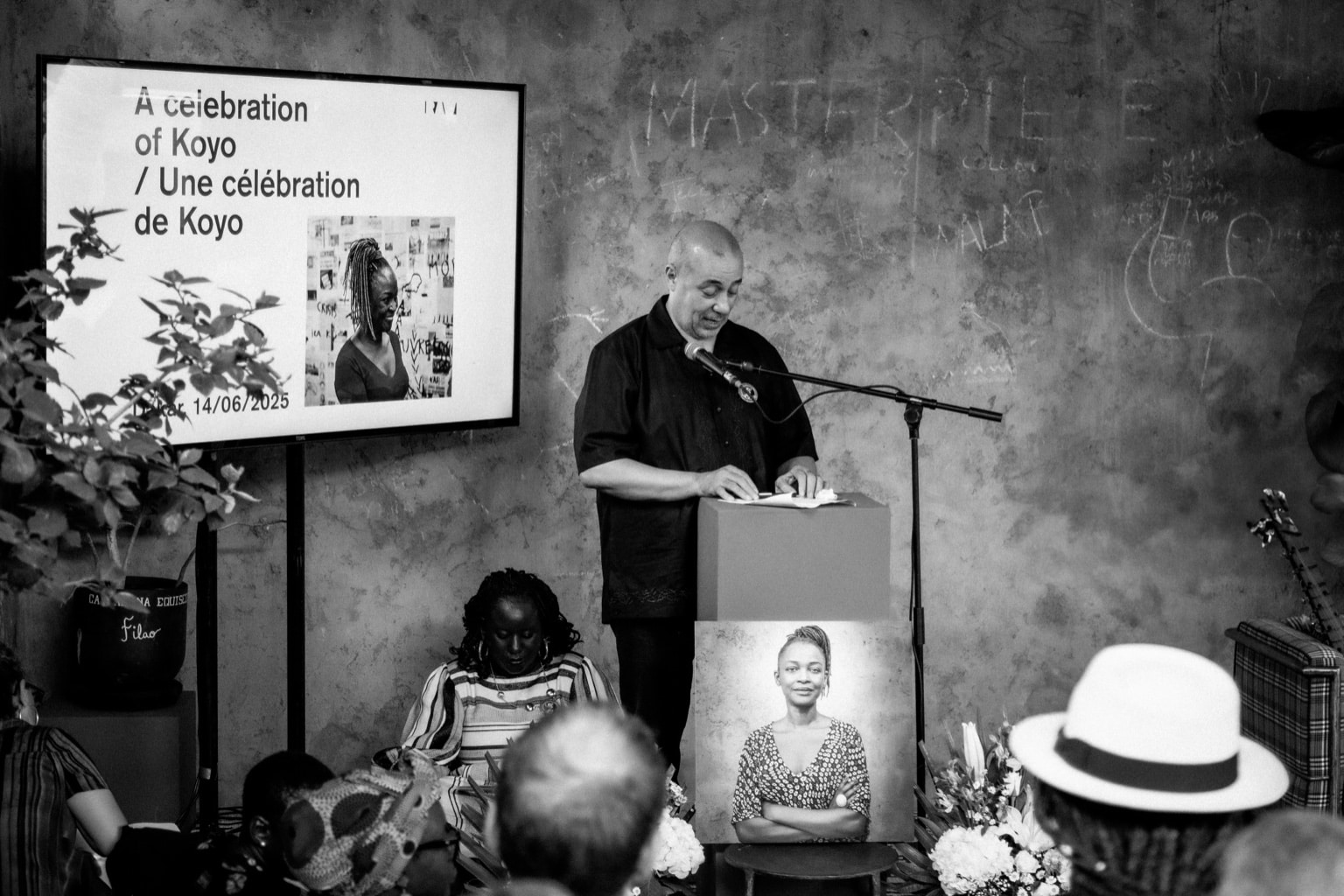

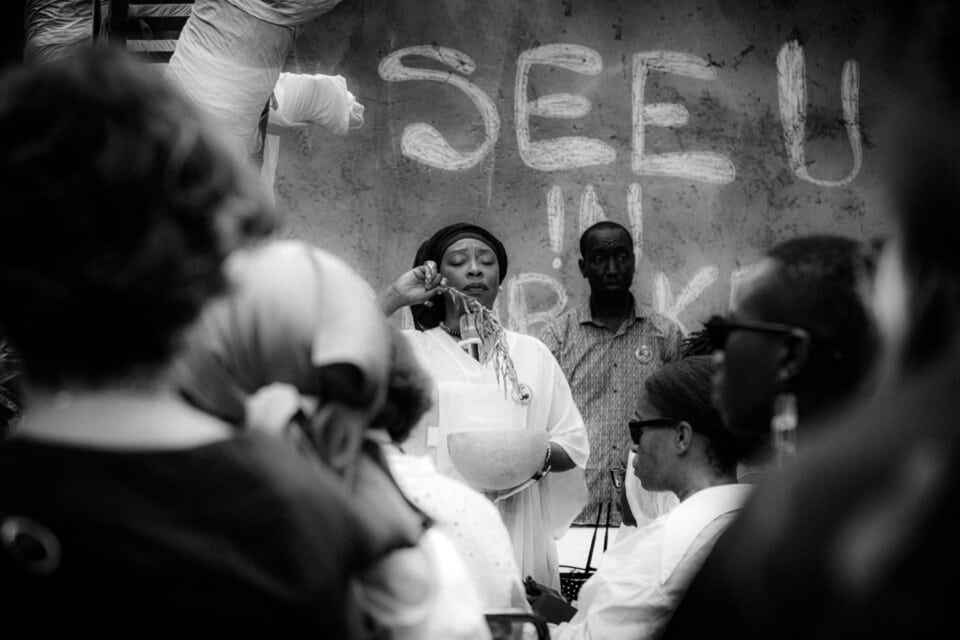
Courtesy of Malick Welli, June 2025.

I first met Koyo with my friend, the artist Simone Leigh, when we were in Dakar in May 2014. We had been invited by Bisi Silva as lecturers for Asiko, Bisi’s five-week program for African artists and curators, which she organized in a different African city each year. Bisi took us to lunch on the roof of Raw Material Company, where she introduced us to its visionary founder, the strikingly beautiful and stylish Koyo Kouoh. 

Over the years, Koyo and I had a number of heightened conversations about the state of the global art world, what it meant to work in the parallel but less overlapping African and Black American art worlds, and the Pan African crossroads where we meet. One of Koyo’s ongoing critiques was about what she saw as the lack of physical presence among Black American curators on the African continent. I hope that through our dialogue we understood each other and that this critique extends beyond individuals and to institutions in order that they support Global South and diasporic travel as critical in our field. I believe this is how we honor Koyo. By collaborating transnationally, supporting each other’s work, inviting each other in. 

It is acutely painful to lose Koyo at the precipice of her career, before fulfilling her dream in Venice, and in devastating succession after the continent’s most prominent curators, Bisi and Okwui Enwezor. Why does shifting the center, confronting the colonial structures of the art world, and ascending to its height require our very lives? How can we not only navigate but also actively change the art world we are co-creating so that it is kinder? Less severe. Less demanding. Less precarious. Less isolating. A place where we can center the people and care for each other.

– Rashida Bumbray


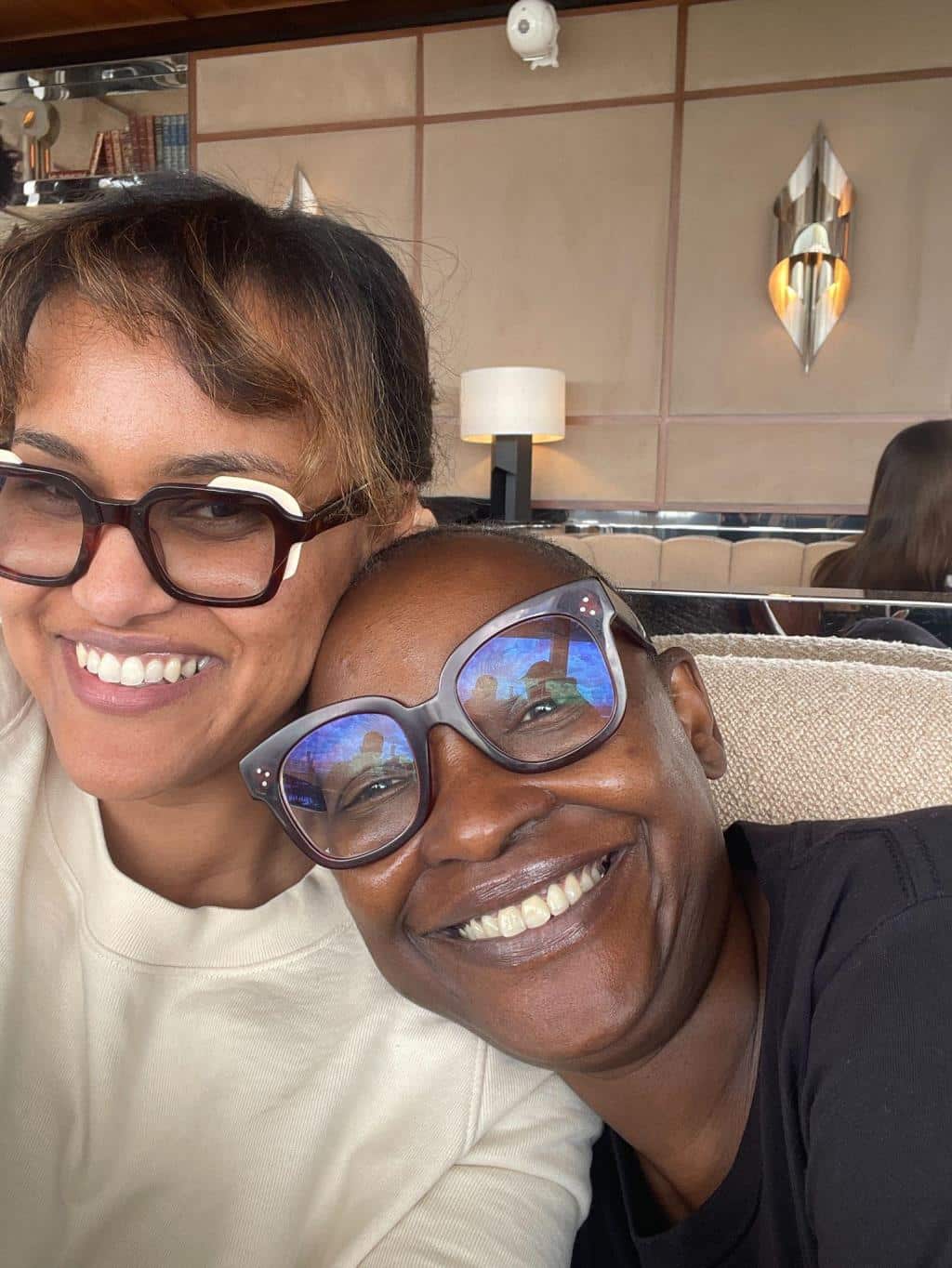
Mehret Mandefro (left) and Koyo Kouoh (right). Courtesy of Mehret Mandefro.

Koyo Kouoh was a beloved collaborator and friend who taught me volumes about the power of cultural clarity as an expansive force. She moved through the world with unmatched vision and style, always leading with love and fierce conviction. Her curatorial practice was never just about exhibition—it was illumination, liberation, and legacy. Koyo showed us that art is a compass, and artists are cartographers of the human spirit. Anyone doing cultural work in Africa AND IN HER DIASPORA stands in the house she and Bisi Silva built. She expanded every room she entered and left us all a blueprint for becoming more capacious.

– Mehret Mandefro


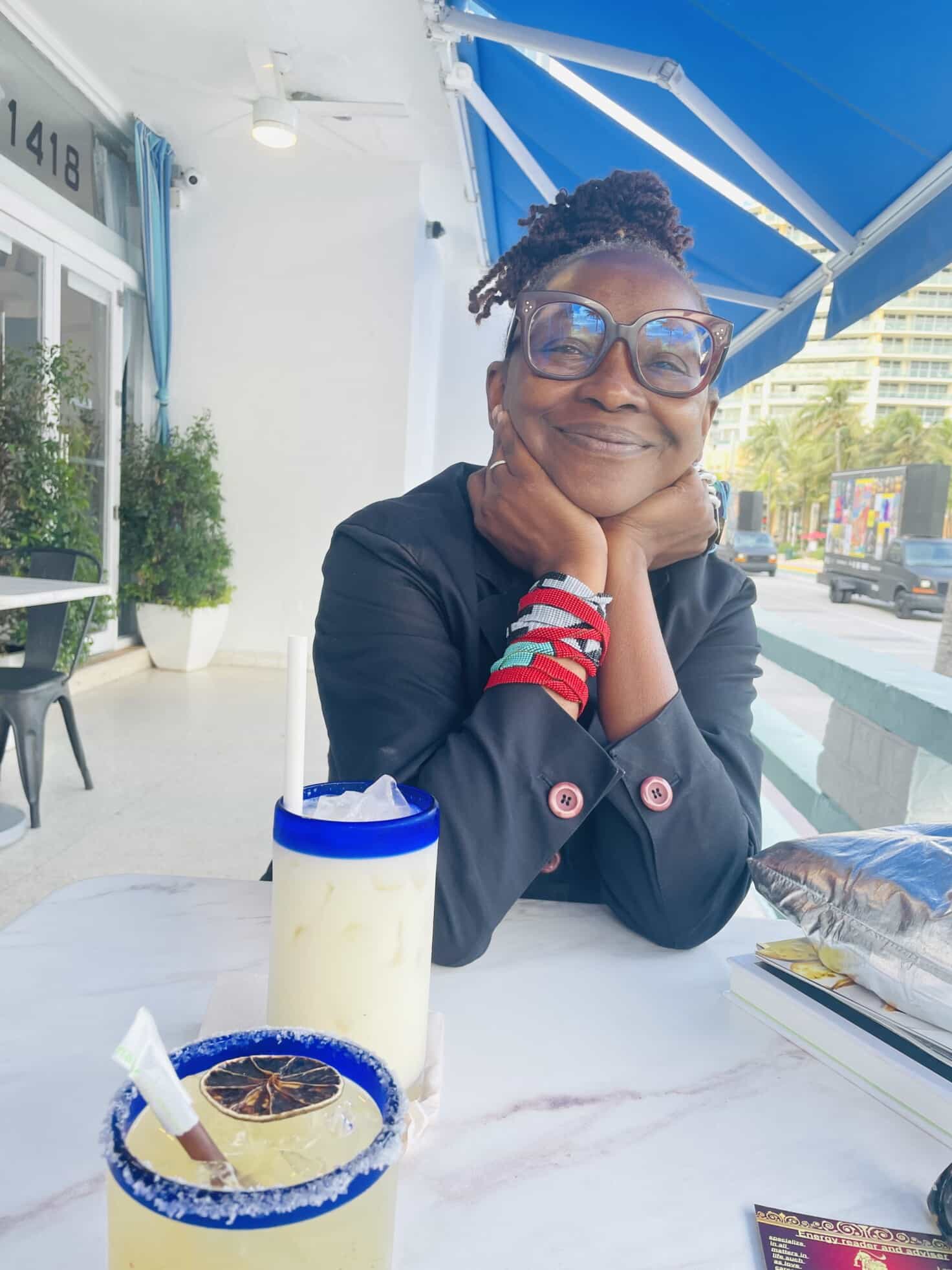
Photo of Koyo Kouoh, courtesy of janera solomon.

a remembrance / a promise

You would say, and often did say
why wait? why wait? wait for what? 
 

Despite all evidence we still act as though 
life will come as promised
a cliche I know. 
 

I thought we would have more time. 
 

Oh my dear.
 

You made of us a constellation —
a singular galaxy 
Talk about force!
 

Madame Koyo we do believe you 
to be an angel of sheer possibility
pure brilliance. 
 

Because of you we commit ourselves 
to witnessing — in the way souls touch. 
 

We will not keep your wisdom a secret. 
 

We know we cannot not simply observe,
it would not be enough. We know we must make each day, at least one 
 

full bodied step
 — singing and dancing, soul wide open. 
 

As with any sacred act, this remembrance
is an invitation, an interrogation, calling us to celebration too. 

– janera solomon


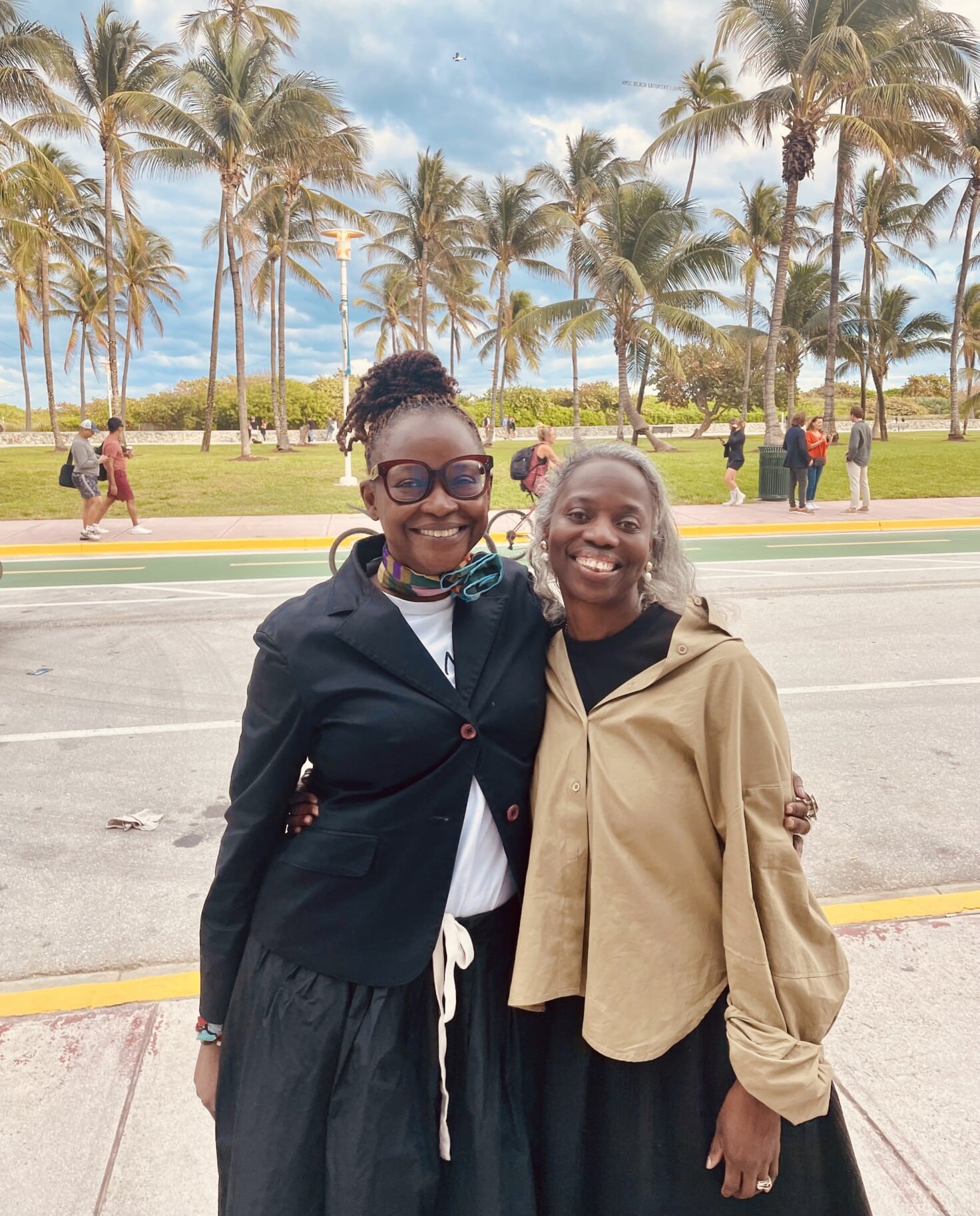
Koyo Kouoh (left) and janera solomon (right). Courtesy of janera solomon.

Under the Mango Tree

We gather in different voices, from different places, but with one rhythm. Yours. 

You taught us to stop waiting for a seat at their table. To build our own. To feed each other. To imagine more than what was given. 

You reminded us we are not defined by what we lack. 

We are fragments, yes: of brilliance, memory, fire, laughter. 

And we resist, not as performance, but as breath. 

You chose Dakar. You knew where seeds could take root. 

You made Raw not just a space, but a pulse. A place where art meets society. Where questions matter. Where beauty becomes practice. 

You laughed in a way that unsettled power. 

You carried tenderness like a weapon. 

You built homes where others saw ruins. 

And you never forgot that people matter more than things. 

We celebrate you under the mango tree at Raw.

The ancestors walk with you now. Joe, Mambéty, Okwui, Bisi. You are home. 

And here, we keep moving. 

We laugh. We build. We speak your name, softly and out loud. Joy to you, Koyo. Always.

– Malick Welli


Courtesy of Malick Welli, June 2025.

Footnotes:

  1. Charlene Prempeh, “Curator Koyo Kouoh: ‘When I need to feel inspired, I go to sleep,’” Financial Times, May 2, 2025, https://www.ft.com/content/ccccbd4a-fa66-40c9-9efc-622a696601b7.
  2. Phoebe Roberts, “Koyo Kouoh: On the power of Black self-representation,” Artforum, August 23, 2024, https://www.artforum.com/columns/koyo-kouoh-when-we-see-us-557624/.